

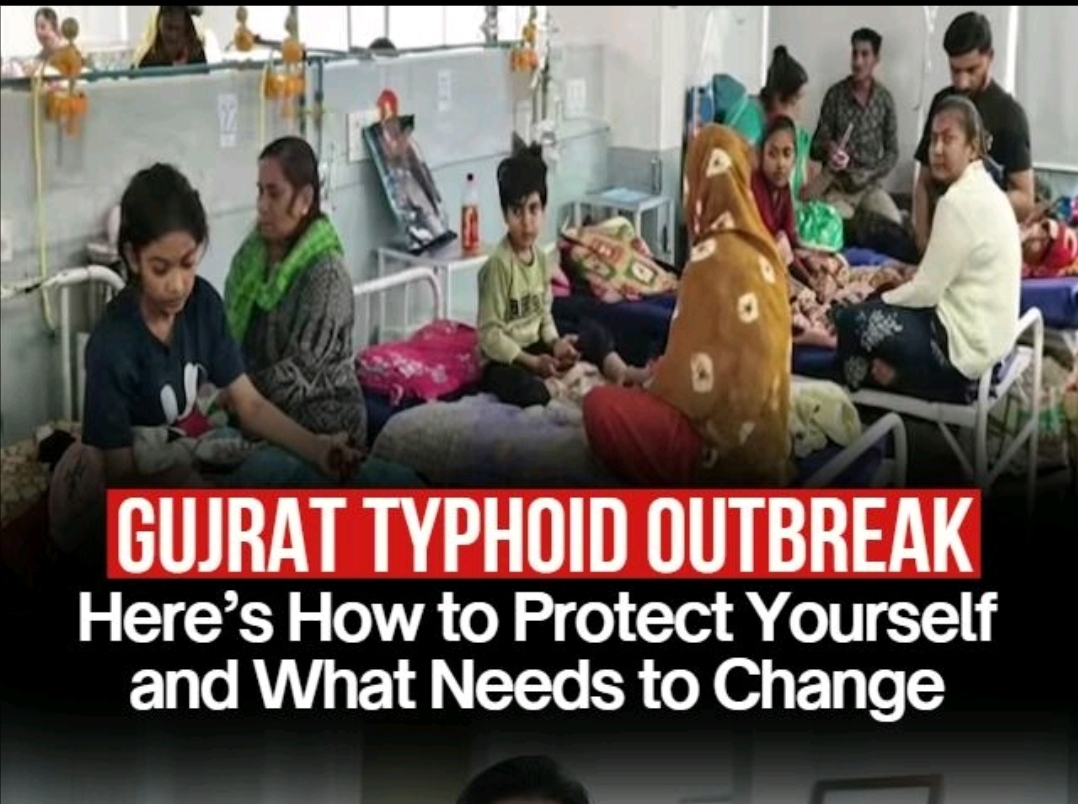
The recent typhoid outbreak in Gandhinagar, with over 150 people hospitalised and children losing their lives, is a serious public health warning. This isn’t just about one city. It’s about how quickly water-borne diseases spread when prevention fails.
What you can do right now (prevention) .Drink only boiled or filtered water
Use safe water even for brushing teeth
Avoid street food, raw salads, and cut fruits
Eat freshly cooked, hot meals
Wash hands thoroughly with soap before eating
Get tested if fever lasts more than 2–3 days
What authorities must act on urgently
Immediate water quality testing across all affected areas
Pipeline inspection and repairs, not just advisories
Temporary alternate safe water supply where contamination is suspected
Clear public communication on affected zones
Proactive screening camps in high-risk areas
What actually happens in typhoid
Typhoid isn’t a “normal fever.” It is caused by Salmonella typhi and spreads through contaminated water and food. If diagnosis or treatment is delayed, it can lead to:
• Severe dehydration
• Intestinal bleeding or perforation
• Sepsis
• Life-threatening complications, especially in children
Why this matters
Typhoid is preventable. When outbreaks occur, they point to failures in water safety and early detection, not medical capability.
. Awareness spreads faster than infection and it can save lives.
@Ashok Terli


