

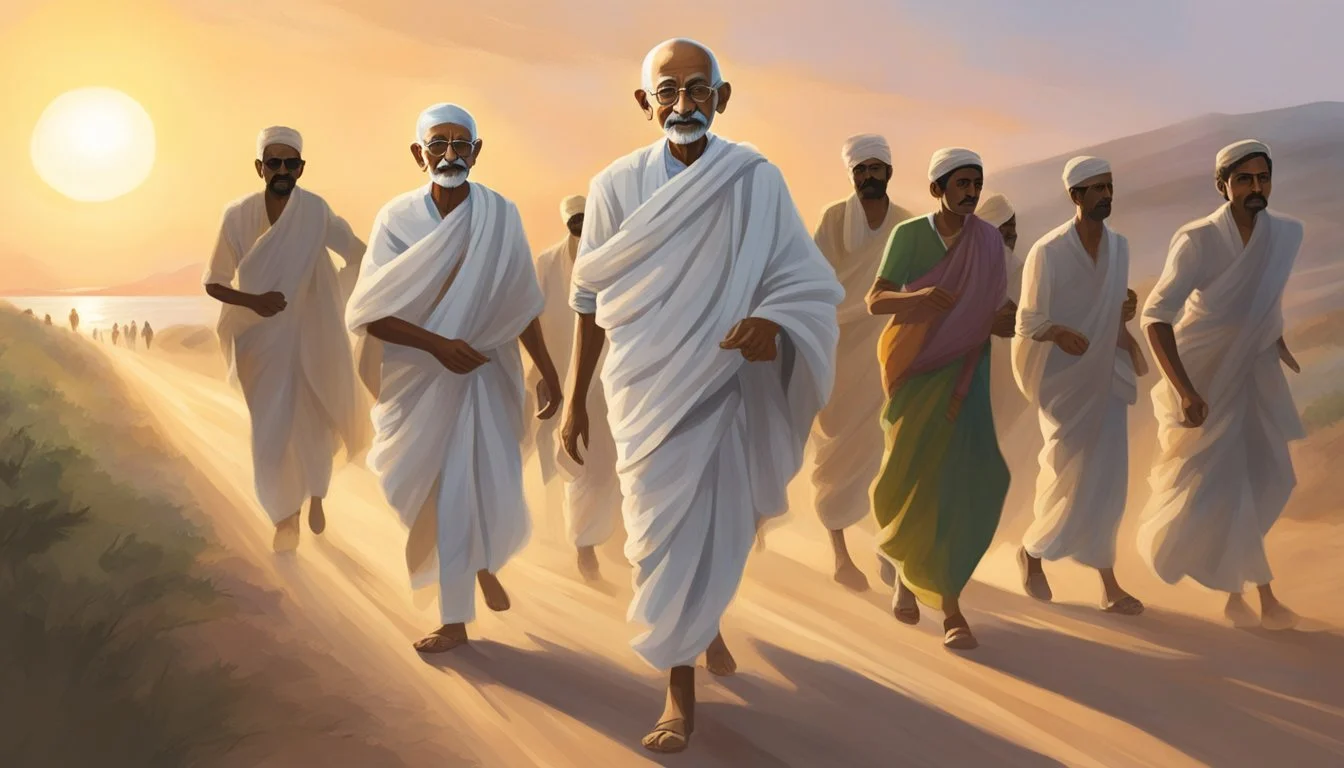
In 1930, the British Empire held a monopoly on one of life’s most basic necessities: salt. By taxing a gift from the ocean, they weren’t just collecting revenue; they were taxing the survival of the poorest. Mahatma Gandhi decided that if the law was unjust, the most powerful response was to simply, peacefully, break it.
A Journey of 240 Miles
On March 12, Gandhi stepped out of his ashram with 78 volunteers. His weapon? Walking. What began as a small group of pilgrims transformed into a human tide. For 24 days, they marched 387 kilometers toward the sea. Every village they passed ignited with the spirit of Satyagraha (truth-force). By the time Gandhi reached the shores of Dandi, he wasn’t just leading a protest; he was leading a nation’s conscience.
The Act That Shook an Empire
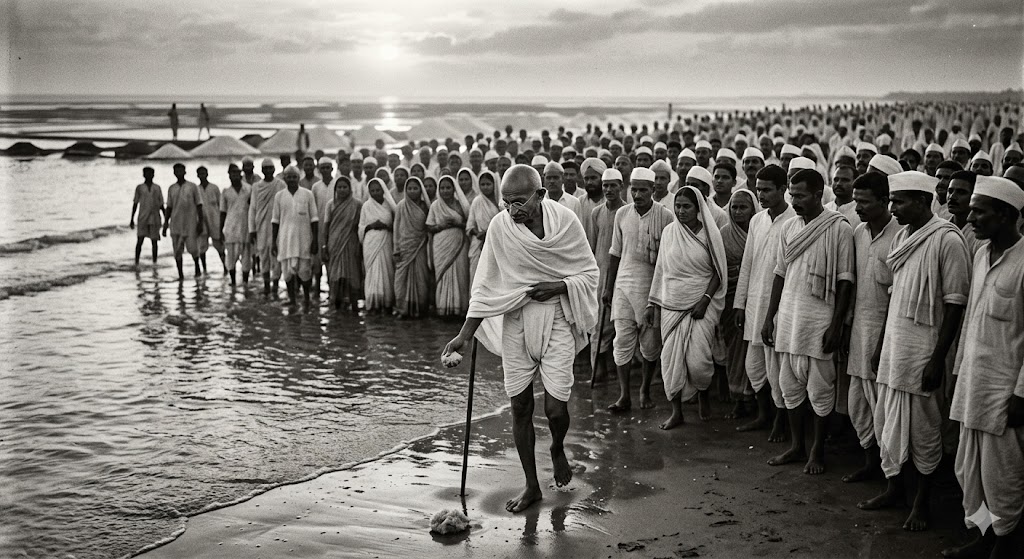
On April 6, Gandhi knelt on the sand, reached down, and picked up a small lump of natural salt.
“With this, I am shaking the foundations of the British Empire.”
That single, quiet gesture sparked a wildfire. Across India’s vast coastline, millions of ordinary people—farmers, weavers, and mothers—began making their own salt. They didn’t use guns or grit; they used the sea
Why It Still Matters
The Salt March proved that injustice thrives on cooperation, and withers under nonviolent defiance. * Global Impact: It turned the world’s eyes toward India, proving that moral high ground is more powerful than military might.
Mass Mobilization: It broke the barrier of fear, leading to 60,000 arrests but creating millions of revolutionaries.

A Timeless Lesson: It showed that even the smallest grain of salt can tip the scales of history when held by a hand seeking justice.
Gandhi’s march reminds us that no walk is too long if the destination is freedom.

