
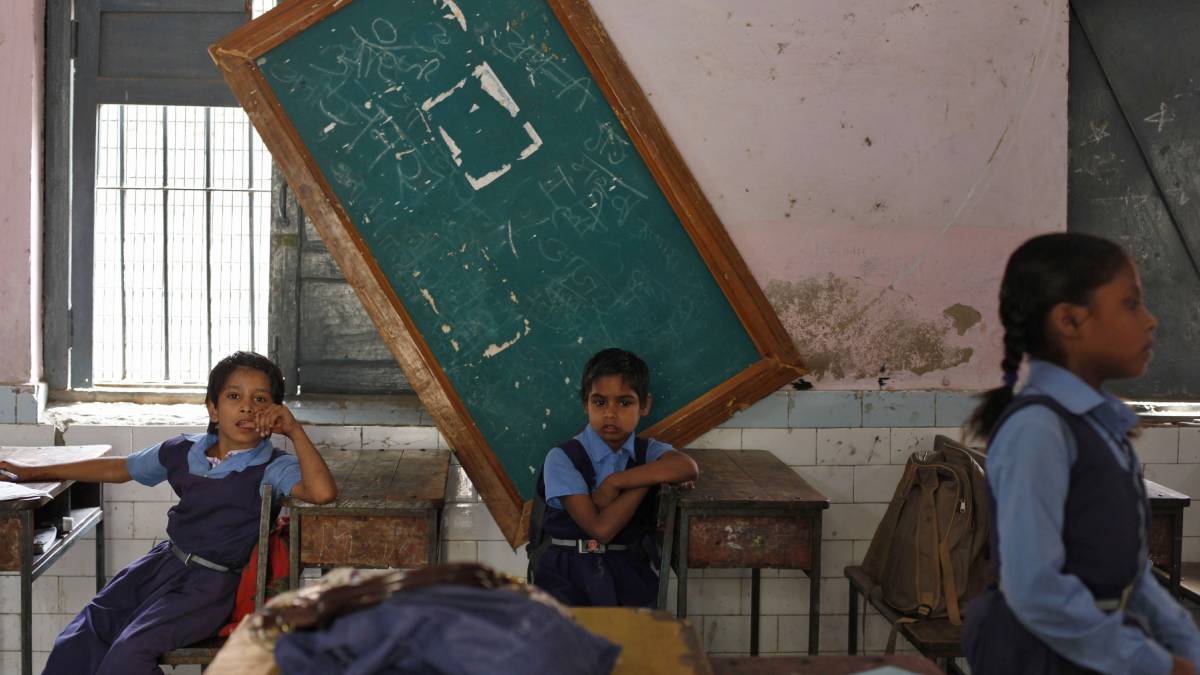
NEW DELHI — The Union Ministry of Education has released a comprehensive set of data through the Unified District Information System for Education Plus (UDISE+) for the academic cycle of 2024-25. The findings reveal a deepening structural crisis within India’s government school system: while the total number of schools remains high, a significant portion of the infrastructure is currently operating with zero or near-zero student enrolment. This phenomenon has sparked an urgent debate regarding the efficiency of teacher deployment and the allocation of the national education budget.
The Rising Trend of Low-Enrolment Institutions
As of the current academic year, India operates approximately 10.13 lakh government schools. However, the data reveals a startling trend toward “micro-enrolment.” While the number of schools with absolutely zero students has dropped to 5,149 (an improvement from previous years), there has been a massive 24% surge in schools with fewer than ten students.
Today, over 65,054 government schools nationwide are operating with less than ten children on their rolls. This suggests that despite the physical existence of schools, the “future pillars of India” are increasingly moving away from these institutions, leaving behind empty classrooms and underutilized facilities.
The Geography of Empty Classrooms
The crisis is not evenly distributed across the country but is heavily concentrated in specific regions. A staggering 70% of all zero-enrolment schools in India are located in just two states: Telangana and West Bengal.
In Telangana, districts like Nalgonda have become hotspots for this trend, with hundreds of schools functioning purely on paper without a single student in attendance. Similarly, in West Bengal, even urban centers like Kolkata are reporting government schools with zero enrolment. Other states like Uttar Pradesh and Maharashtra also face a different challenge, housing the highest number of “micro-schools” where enrolment barely reaches double digits.
The Teacher Deployment Paradox
The most controversial aspect of the report is the allocation of human resources. Despite the lack of students, the number of teachers posted in these low-enrolment schools has actually increased by roughly 20% since the 2022-23 cycle.
Currently, there are 1.44 lakh teachers assigned to schools that have between zero and nine students. This creates a massive inefficiency where the teacher-to-student ratio is skewed beyond any logical necessity. In states like Bihar and West Bengal, the average number of teachers per low-enrolment school ranges from four to five. This means that in thousands of locations, there are nearly as many—or more—teachers than there are students, while other high-density urban schools continue to suffer from severe staff shortages.
Underlying Causes: Migration and Competition
The Ministry of Education identifies two primary drivers for this shift. First is the rural-to-urban migration, where families are moving toward economic hubs, leaving village infrastructure behind. Second, and perhaps more significantly, is the rising preference for private education. Even in low-income families, there is a perceived value in “English-medium” private schools, which are drawing students away from government-run vernacular institutions.