

A Distinguished IAS Officer Driving Administrative Excellence, Governance Reforms, and Inclusive Development in Punjab
Profile at a Glance
“Effective governance is built on transparency, decisive leadership, and a commitment to public welfare.” This philosophy is reflected in the remarkable career of Shri K. A. P. Sinha, IAS, one of Punjab’s most experienced civil servants.
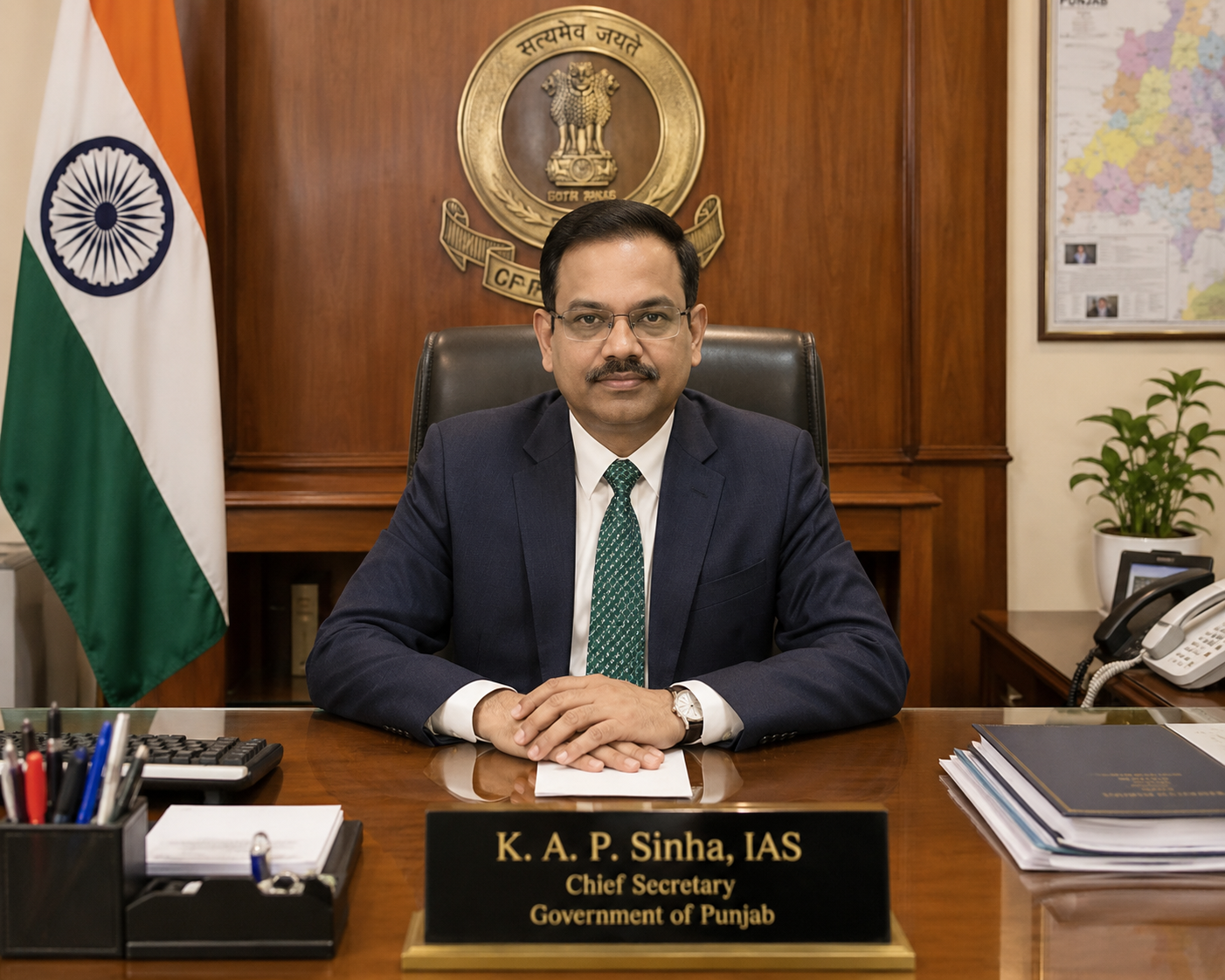
Shri K. A. P. Sinha, IAS, a 1992-batch officer of the Punjab Cadre, is currently serving as the Chief Secretary to the Government of Punjab, while also holding the additional charge of Principal Secretary, Personnel, Vigilance, and General Administration. He has led several key departments, including Finance, Revenue, Planning, and Development, and is widely respected for his administrative expertise.
“The Calling: A Commitment to Public Service”
Shri K. A. P. Sinha has personal account of his motivation for joining the Indian Administrative Service, his career reflects a deep commitment to public administration, policy implementation, and nation-building. With a strong academic background in engineering and economics, he chose the civil services to contribute to governance and socio-economic development. After successfully clearing the UPSC Civil Services Examination, he joined the Indian Administrative Service in 1992, embarking on a distinguished career dedicated to public service.
Early Life and the UPSC Journey
Born in Bihar, Shri K. A. P. Sinha excelled academically from an early age. He earned a Bachelor of Engineering (Mining Engineering) and later completed a Master of Arts in Economics, combining technical knowledge with expertise in public policy and governance. Inspired to serve society through effective administration, he prepared for the highly competitive UPSC Civil Services Examination and secured a place in the 1992 batch of the Indian Administrative Service (Punjab Cadre). His academic foundation has significantly contributed to his success in managing complex administrative and financial responsibilities.
Stepping into the Field: A Career of Administrative Excellence
Over more than three decades, Shri K. A. P. Sinha has held several high-profile positions, including:
- Chief Secretary, Government of Punjab.
- Additional Chief Secretary-cum-Financial Commissioner (Revenue & Rehabilitation).
- Administrative Head of Finance Department.
- Administrative Head of Food, Civil Supplies & Consumer Affairs.
- Leadership roles in Planning, General Administration, Transport, Parliamentary Affairs, and Higher Education.
- Senior assignments with the Government of India in the Ministries of External Affairs, Commerce & Industry, and Atomic Energy.
The Turning Point / Signature Initiative
One of Shri K. A. P. Sinha’s defining contributions has been strengthening Punjab’s financial governance and administrative reforms. His leadership has focused on improving fiscal management, enhancing transparency, streamlining government processes, and accelerating development projects while ensuring efficient public service delivery.
Major Achievements
- Strengthened financial administration and public expenditure management.
- Led key governance and administrative reforms.
- Improved revenue administration.
- Promoted transparent and accountable governance.
- Guided infrastructure and development initiatives.
- Coordinated major state-level policy implementation.
- Enhanced efficiency across multiple government departments.
Challenges Overcome
Throughout his career, Shri Sinha has successfully managed:
- Complex fiscal and budgetary challenges.
- Administrative reforms across multiple departments.
- Revenue administration and land governance.
- Inter-departmental coordination.
- Policy implementation during changing governance priorities.
- Large-scale development and public welfare initiatives.
Awards & Recognition
Shri K. A. P. Sinha, he has received:
- Recognition for distinguished administrative leadership.
- Appreciation for financial and governance reforms.
- Commendations for efficient public administration.
- High-level responsibilities entrusted by the Government of Punjab and the Government of India, reflecting confidence in his leadership.
Personal Insight
An inspirational thought reflecting his administrative philosophy
“Good governance is achieved through integrity, accountability, and unwavering commitment to public service.”
Awards and Legacy
Shri K. A. P. Sinha’s legacy includes:
- Strengthening public administration.
- Modernizing governance systems.
- Improving financial discipline.
- Promoting transparent decision-making.
- Guiding major developmental initiatives.
- Mentoring the next generation of civil servants.
Conclusion & The Vision Ahead
As Chief Secretary of Punjab, Shri K. A. P. Sinha continues to play a vital role in shaping governance and development across the state. His distinguished career demonstrates how integrity, administrative excellence, and visionary leadership can strengthen public institutions and improve citizens’ lives.
Quick Reference
- Full Name: Shri K. A. P. Sinha, IAS
- Current Posting: Chief Secretary, Government of Punjab
- Previous Postings: Additional Chief Secretary; Financial Commissioner (Revenue); Head of Finance, Planning, Food & Civil Supplies, General Administration, and other key departments
- Awards & Achievements: Recognized for administrative excellence, governance reforms, and financial management
- Education: B.E. (Mining Engineering); M.A. (Economics)
- Batch: 1992
- Cadre: Punjab Cadre
- Promotions: District Administration → Secretary → Principal Secretary → Additional Chief Secretary → Chief Secretary
- Key Issues Handled: Finance, Revenue Administration, Governance Reforms, Public Administration, Planning, Development
- Inspirations To Count: Integrity, accountability, leadership, transparency, and public welfare.
Message From the Officer:
“Serve with integrity, lead with compassion, and remember that every policy, every decision, and every reform should ultimately improve the lives of the people.”