

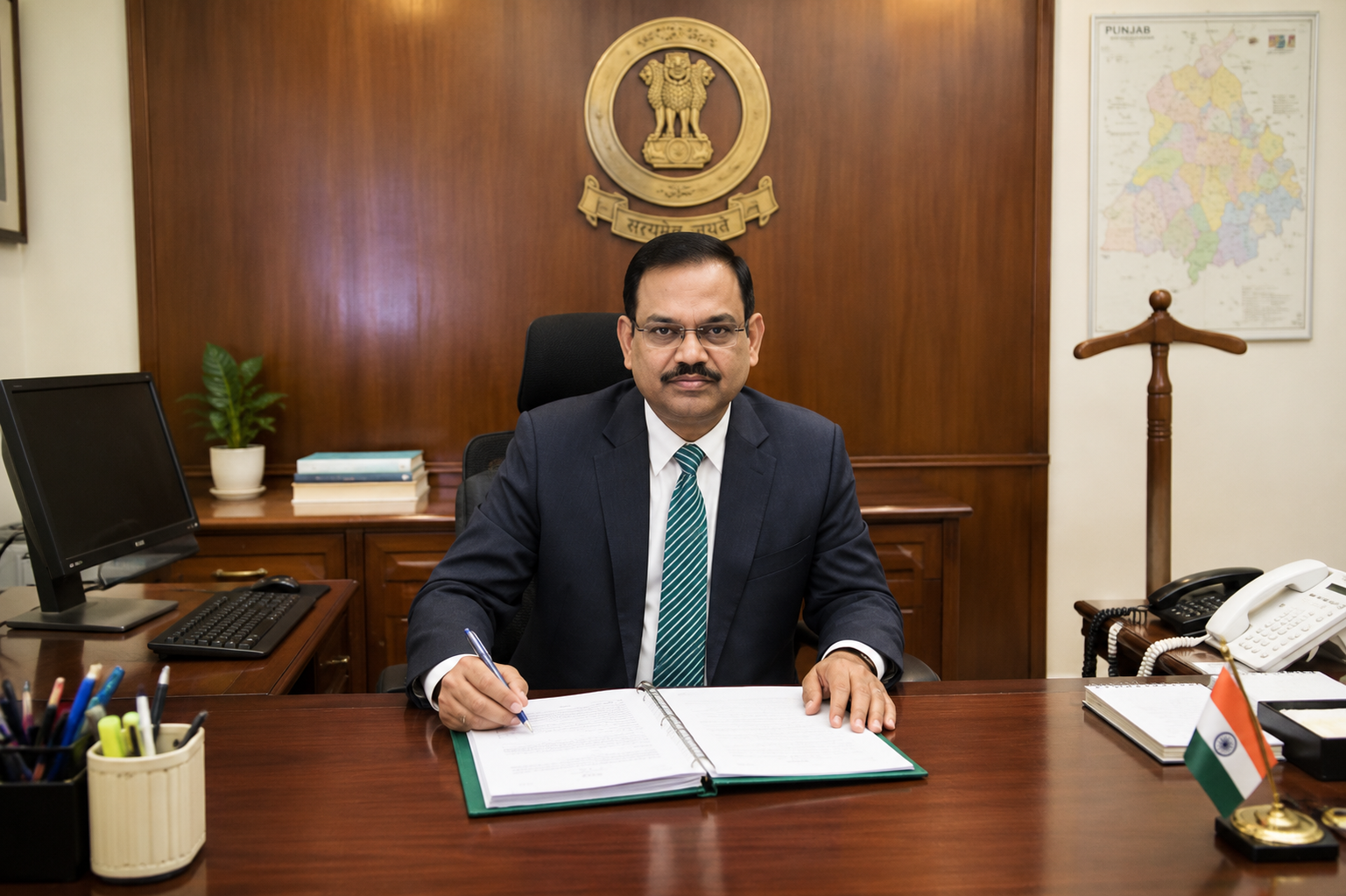
A seasoned 1992-batch IAS officer of the Punjab cadre, K. A. P. Sinha has emerged as one of Punjab’s most experienced administrators, combining decades of governance, policy implementation, and institutional reforms while serving as the Chief Secretary of the Government of Punjab. His journey reflects integrity, administrative excellence, and an unwavering commitment to public service.
Profile at a Glance
“Good governance is measured not merely by policies framed but by the positive change citizens experience in their daily lives.” This philosophy aptly reflects the administrative approach of K. A. P. Sinha, IAS, one of Punjab’s most accomplished civil servants.
A 1992-batch Indian Administrative Service (IAS) officer of the Punjab Cadre, K. A. P. Sinha currently serves as the Chief Secretary to the Government of Punjab, the highest-ranking civil servant in the state administration. With more than three decades of distinguished service, he has played a pivotal role in policy formulation, financial governance, administrative reforms, industrial development, infrastructure planning, and public welfare initiatives.
Known for his calm leadership, strategic decision-making, and transparent administration, K. A. P. Sinha has earned the trust of successive governments and has consistently demonstrated that efficient governance is built on accountability, innovation, and citizen-centric policies.
The Catalyst – The Inspiration Behind Joining Public Service
Like many distinguished IAS officers, K. A. P. Sinha chose civil services with the vision of contributing directly to nation-building and public administration. Throughout his career, he has believed that effective governance can significantly improve the quality of life for ordinary citizens through efficient delivery of public services.
Rather than seeking personal recognition, his career reflects a commitment to institutional strengthening, policy implementation, and administrative transparency.
His motivation has consistently centered on:
- Strengthening governance systems
- Promoting economic and industrial development
- Improving financial management
- Enhancing public service delivery
- Building efficient administrative institutions
His leadership style reflects patience, professionalism, and evidence-based decision-making.
Early Life and the UPSC Journey
Joining the Indian Administrative Service in 1992, K. A. P. Sinha entered government service during a period when India was witnessing major economic reforms.
His UPSC success reflected:
- Strong academic preparation
- Exceptional analytical skills
- Deep understanding of governance
- Commitment to public service
- Administrative leadership potential
Over the following decades, he steadily established himself as a capable administrator capable of handling both developmental and governance-related responsibilities.
Stepping into the Field: Notable Administrative Stints
Over a career spanning more than 30 years, K. A. P. Sinha has held several important positions within the Punjab Government.
His assignments have included responsibilities in:
- Finance
- Planning
- Revenue Administration
- Industrial Development
- Administrative Reforms
- Infrastructure Development
- Public Administration
- Governance Coordination
Each assignment strengthened his expertise in policy implementation and state-level governance.
His reputation has consistently been that of a results-oriented administrator capable of managing complex administrative challenges.
Career Progression
Throughout his IAS career, K. A. P. Sinha progressed through various administrative levels including:
- Sub-Divisional Administration
- District Administration
- Departmental Leadership
- Secretariat Administration
- Senior Principal Secretary-level responsibilities
- Additional Chief Secretary-level responsibilities
- Chief Secretary of Punjab
His rise through the bureaucracy reflects decades of professional excellence and administrative credibility.
Major Achievements & Administrative Leadership
1. Administrative Reforms
K. A. P. Sinha has contributed significantly to improving governance processes through institutional reforms aimed at increasing transparency and efficiency.
2. Financial Governance
He has been associated with strengthening financial discipline, budget planning, and responsible fiscal management across government departments.
3. Infrastructure Development
He has played an important role in coordinating infrastructure projects that support Punjab’s long-term economic development.
4. Industrial Growth
His policy-level involvement has supported industrial investment, business facilitation, and economic growth initiatives.
5. Inter-Departmental Coordination
One of his strongest administrative abilities has been ensuring effective coordination among multiple government departments for timely implementation of public policies.
6. Governance During Challenging Periods
As one of Punjab’s senior-most administrators, he has helped oversee governance during periods requiring coordinated responses to economic, administrative, and public service challenges.
The Turning Point / Signature Leadership
One defining aspect of K. A. P. Sinha’s career has been his leadership in coordinating state administration at the highest level.
Rather than being associated with a single flagship initiative, his contribution lies in ensuring that:
- Government policies are implemented efficiently.
- Departments work in coordination.
- Administrative bottlenecks are resolved promptly.
- Development projects move forward without delays.
- Governance remains responsive and accountable.
As Chief Secretary, his role extends beyond any one department, encompassing the entire administrative machinery of Punjab.
Challenges Overcome
Senior civil servants frequently encounter complex governance challenges, and K. A. P. Sinha’s career has involved navigating:
- Large-scale administrative coordination
- Fiscal and budgetary pressures
- Policy implementation across diverse sectors
- Balancing development priorities with public welfare
- Managing governance during changing political administrations
- Ensuring continuity in public service delivery
His calm and consensus-driven approach has been instrumental in addressing these challenges.
Leadership Style
Colleagues often recognize K. A. P. Sinha for:
- Administrative integrity
- Strategic thinking
- Calm decision-making
- Transparency
- Collaborative governance
- Policy-oriented leadership
- Institution-building
- Accountability
- Citizen-first administration
Awards & Recognition
- Appointed as Chief Secretary, Government of Punjab, reflecting the confidence of the state leadership in his administrative abilities.
- More than three decades of distinguished service in the Punjab cadre of the Indian Administrative Service.
- Recognized for leadership in governance, administrative reforms, financial management, and policy implementation.
- Known for promoting transparent, accountable, and citizen-centric governance across key government departments.
- Respected for his strategic coordination of state administration and institutional strengthening.
- Appointed as Chief Secretary, Government of Punjab, reflecting the confidence of the state leadership in his administrative abilities.
- More than three decades of distinguished service in the Punjab cadre of the Indian Administrative Service.
- Recognized for leadership in governance, administrative reforms, financial management, and policy implementation.
- Known for promoting transparent, accountable, and citizen-centric governance across key government departments.
- Respected for his strategic coordination of state administration and institutional strengthening.
Legacy
K. A. P. Sinha’s legacy is defined by:
- Strengthening governance institutions
- Promoting administrative professionalism
- Supporting economic and industrial development
- Enhancing policy implementation
- Building efficient government systems
- Encouraging transparent administration
His work continues to influence Punjab’s governance framework.
Personal Insight
A fitting summary of his administrative philosophy would be:
“Good governance succeeds when institutions function efficiently, policies are implemented transparently, and citizens remain at the center of every administrative decision.”
Conclusion – The Vision Ahead
As Punjab continues to pursue inclusive growth, economic development, and administrative modernization, K. A. P. Sinha’s leadership remains central to ensuring effective governance.
His career demonstrates that successful public administration is built on professionalism, institutional integrity, and long-term vision rather than personal publicity.
For aspiring civil servants, his journey illustrates that dedication, discipline, and ethical leadership are the foundations of a meaningful career in public service.
Quick Reference
- Full Name: K. A. P. Sinha
- Service: Indian Administrative Service (IAS)
- Current Posting: Chief Secretary, Government of Punjab
- Cadre: Punjab
- Batch: 1992
- Current Rank: Chief Secretary
- Previous Postings: Held several senior administrative positions including Principal Secretary and Additional Chief Secretary in various Punjab Government departments (specific postings should be verified from official records before publication).
- Education: B.E. (Mining Engineering), M.A. (Economics), and LL.B./LL.M.
- Awards & Achievements: recognized for distinguished administrative leadership.
- Promotions: Progressed from district and departmental assignments to Principal Secretary, Additional Chief Secretary, and Chief Secretary.
- Key Issues Handled: Administrative reforms, financial governance, industrial development, infrastructure coordination, public administration, policy implementation, and inter-departmental coordination.
- Inspirations to Count: Integrity, institutional leadership, transparency, professionalism, public service, accountability, efficient governance, strategic planning, policy execution, and citizen-centric administration.
Message From the Officer
“Public service is not merely about holding office—it is about building institutions, serving citizens with integrity, and ensuring that governance creates lasting positive change for society.”