

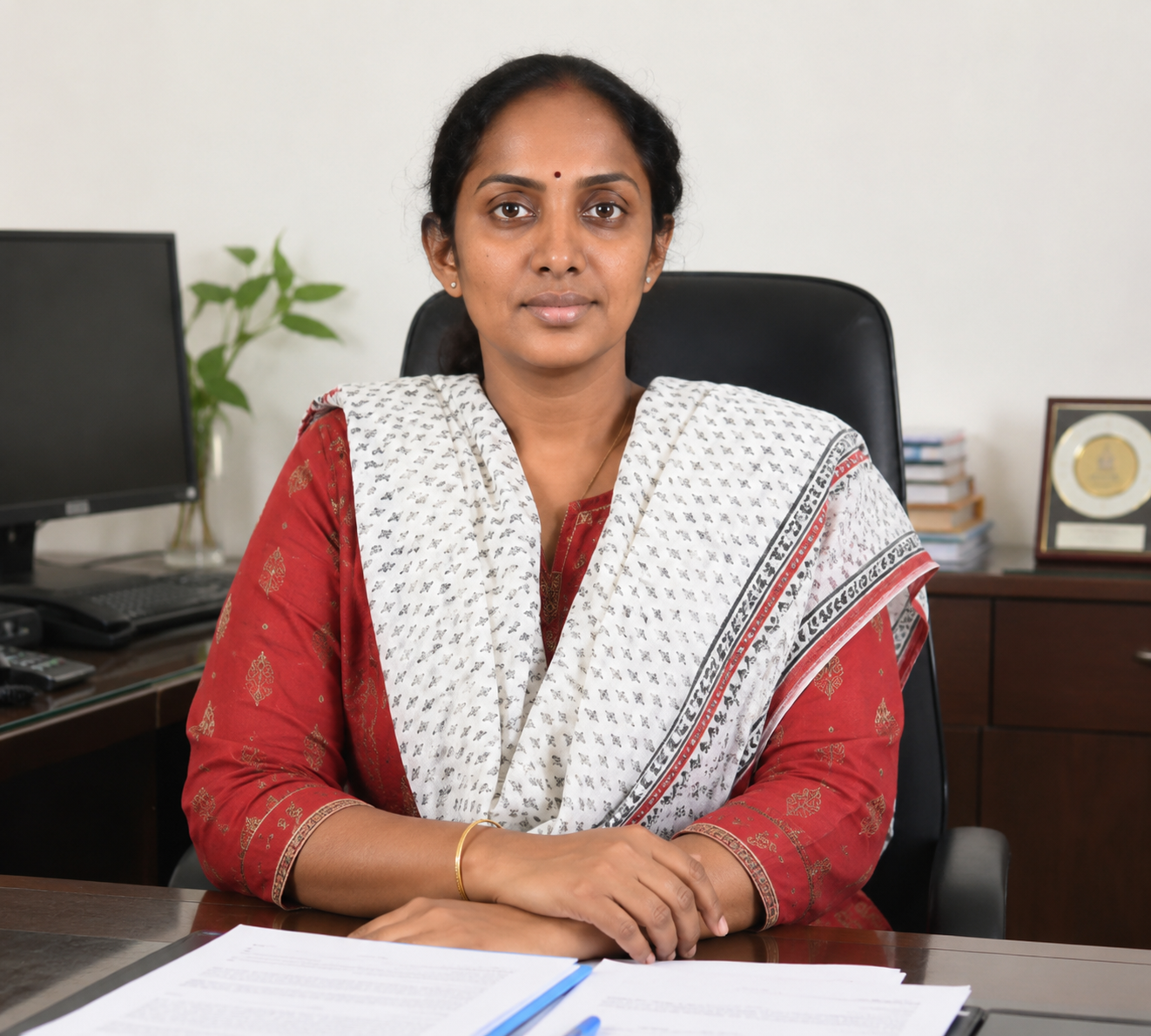
From district administration and public health to agriculture, rural development and disaster recovery, Apoorva’s three-decade career reflects a commitment to people-centred governance and institution-building.
A Career Built Around Public Service
A 1994-batch Indian Administrative Service officer of the Tamil Nadu cadre, Apoorva served as Agricultural Production Commissioner and Principal Secretary to Government, Agriculture–Farmers Welfare Department, Tamil Nadu, beginning on 16 October 2023. Her tenure in the agriculture department placed her at the centre of policy implementation relating to agricultural production, farmers’ welfare, food processing, technology and rural livelihoods.
Her public-service journey, however, began much earlier. From her first assignments as Assistant Collector and Sub-Collector to serving as District Collector of Dharmapuri and subsequently taking on senior responsibilities in health, industries, rural development, handlooms and agriculture, she built a career marked by administrative versatility.
Apoorva subsequently retired from the IAS and was appointed by the Government of Tamil Nadu as Administrative Member of the Tamil Nadu Real Estate Appellate Tribunal in February 2025. Her continued public role illustrates how administrative experience can remain valuable even after retirement from the civil service.
The Catalyst: Choosing the Civil Services
The public record available on Apoorva provides details about her academic qualifications and professional career,For a publication that aims to remain factually responsible, it would therefore be inappropriate to invent a childhood anecdote or claim a particular personal motivation without documentary evidence.
What can be established is that Apoorva pursued an academically strong path and ultimately entered the IAS through the UPSC Civil Services Examination as a 1994-batch direct-recruit officer. Her academic qualifications are recorded as M.A., M.Phil. and Ph.D.
Her career subsequently demonstrates a particularly broad administrative orientation. Instead of remaining confined to one policy area, she worked across several sectors involving education, public health, rural development, industries, social welfare, textiles, urban development and agriculture.
That breadth is important because modern public administration requires officers to understand how different government systems intersect: health affects productivity, rural infrastructure affects livelihoods, agricultural markets affect incomes, and public institutions determine how effectively welfare reaches citizens.
Early Life and Upsc journey
This restraint is important for a news publication: verified facts are more valuable than attractive but unsubstantiated biographical details.
The UPSC Journey and Entry into Administration
Apoorva entered the Indian Administrative Service in 1994 as a direct recruit in the Tamil Nadu cadre. Her initial years involved the kind of field exposure that forms the foundation of an IAS career.
Her documented progression included:
- Training and induction into the IAS
- Assistant Collector
- Sub-Collector
- Controller
- District Collector
- Deputy Commissioner
- Joint Secretary-level responsibilities
- Member Secretary
- Commissioner
- Additional Secretary
- Special Secretary
- Project Director
- Principal Secretary
- Managing Director
- Agricultural Production Commissioner and Principal Secretary
This progression reflects movement from field-level administration to increasingly complex policy and departmental responsibilities.
Stepping into the Field: Notable Career Stints
District Collector, Dharmapuri
One of the important field assignments in Apoorva’s career was her tenure as District Collector of Dharmapuri from June 2001 to June 2002.
District Collector assignments are among the most demanding responsibilities in the state civil administration because they bring together revenue administration, law and order coordination, development programmes, disaster response, welfare delivery and direct interaction with citizens.
Apoorva’s subsequent career suggests that this field experience became part of a larger administrative trajectory that moved between grassroots governance and policy-level responsibilities.
A 2026 report on a women-achievers event in Chennai also recalled her Dharmapuri tenure, with the Daily Thanthi Group’s General Manager praising her administrative skill and courage as a bureaucrat.
The Turning Point: Leadership in Disaster Recovery
Among the most notable aspects of Apoorva’s administrative legacy is her association with the Tsunami Project.
At a 2025 leadership panel, she reflected on her three-decade career and discussed her experience leading the Tsunami Project. According to the account, the project delivered more than 14,000 long-pending houses and 138 works, alongside cyclone-relief responsibilities.
The experience highlighted an important lesson in public administration: reconstruction after a disaster is not simply about constructing buildings. It involves community participation, coordination between institutions, transparent communication, decentralised decision-making and the ability to maintain momentum over long implementation periods.
This makes the Tsunami Project a particularly meaningful chapter in understanding Apoorva’s approach to governance.
Challenges Overcome: From Field Administration to Policy Leadership
Apoorva’s career spans more than three decades and covers some of the most demanding areas of public administration.
Her challenges included managing the realities of district administration, working with rural institutions, overseeing public-health systems, handling large departmental structures, coordinating development programmes and taking responsibility for policy implementation at the state level.
The Tsunami Project represented a particularly complex challenge because disaster recovery requires government agencies to deliver results while communities are coping with displacement and loss. Her later account of delivering more than 14,000 long-pending houses and 138 works illustrates the importance of sustained administrative coordination.
Her career also demonstrates the challenge of moving between sectors. Health administration demands a different operational approach from industries; rural development differs from agriculture; and policy leadership requires coordination among ministers, officials, institutions, citizens and private stakeholders.
The ability to adapt across these domains is one of the strongest features of her administrative record.
Personal Insight: Leadership With Compassion
A particularly valuable insight into Apoorva’s philosophy came through her reflections during the 2025 Femina leadership discussion.
Her message, as reported, was to combine ambition with genuine service, remain grounded in real-world data, and ensure that public policies translate into dignity for people at the grassroots.
This philosophy connects many stages of her career.
Whether the issue is a farmer seeking better value, a rural family needing public infrastructure, a patient depending on primary healthcare, a disaster-affected household waiting for rehabilitation, or a citizen seeking an effective institution, administration ultimately has to be judged by its human impact.
Awards, Recognition and Administrative Legacy
Apoorva’s legacy is best understood not through a single award or one headline-making initiative, but through the diversity of institutions and sectors in which she worked.
Her career includes:
District Administration: District Collector, Dharmapuri
Rural Development: Project Director, Panchayat and Rural Development
Healthcare: Senior responsibilities in Health and Family Welfare
Industries: Principal Secretary, Industries
Textiles: Managing Director, Tamil Nadu Handloom Weavers’ Cooperative Society (Co-optex)
Urban Development: Principal Secretary, Housing and Urban Development
Agriculture: Agricultural Production Commissioner and Principal Secretary, Agriculture–Farmers Welfare Department
Disaster Recovery: Leadership associated with the Tsunami Project
Post-Retirement Public Service: Administrative Member, Tamil Nadu Real Estate Appellate Tribunal
This range makes her career an example of multi-sector public administration rather than a profile confined to a single department.
Conclusion: A Legacy of Service and Institutional Leadership
Apoorva’s journey through the Indian Administrative Service is a story of evolution—from field administration to senior policy leadership and, later, continued public service after retirement.
Her work across district administration, rural development, health, industries and agriculture illustrates the breadth of responsibilities carried by senior civil servants. Her association with disaster recovery demonstrates the importance of persistence and community participation, while her agriculture tenure highlighted the growing need to connect farming with technology, food processing, innovation and markets.
The most important lesson from her career may be that good governance is ultimately measured at the grassroots.
Quick Reference
- Full Name: Apoorva, IAS
- Service: Indian Administrative Service
- Batch: 1994
- Cadre: Tamil Nadu
- Recruitment: Direct Recruit / UPSC Civil Services Examination
- Date of Birth: 18 January 1965
- Current Public Role: Administrative Member, Tamil Nadu Real Estate Appellate Tribunal
- IAS Status: Retired
- Former Key Posting: Agricultural Production Commissioner and Principal Secretary to Government, Agriculture–Farmers Welfare Department, Tamil Nadu
- Agriculture Posting: From 16 October 2023
- Major Previous Postings: District Collector, Dharmapuri; Deputy Commissioner, Chennai; Project Director, Panchayat & Rural Development; Principal Secretary, Industries; senior Health & Family Welfare assignments; Managing Director, Co-optex; Principal Secretary, Housing & Urban Development
- Education: M.A., M.Phil. and Ph.D.
- Training: Indian Institute of Management Bangalore; mid-career IAS training; agriculture and rural-development policy training
- Major Administrative Themes: Rural development, public health, disaster recovery, agriculture, food processing, biotechnology and institutional governance
- Notable Contribution: Leadership associated with the Tsunami Project, including delivery of more than 14,000 long-pending houses and 138 works, as discussed in her 2025 leadership appearance
- Agriculture-Era Focus: Food processing, agricultural innovation, biotechnology, farmer welfare and integrated value chains
- Post-Retirement Appointment: Administrative Member, Tamil Nadu Real Estate Appellate Tribunal
- Key Leadership Message: Combine ambition with genuine service, use real-world data and ensure policy delivers dignity at the grassroots.
Message From the Officer
“Let ambition be accompanied by genuine service. Stay rooted in real-world data, listen to people at the grassroots, and ensure that policies translate into dignity and meaningful outcomes for citizens.”