


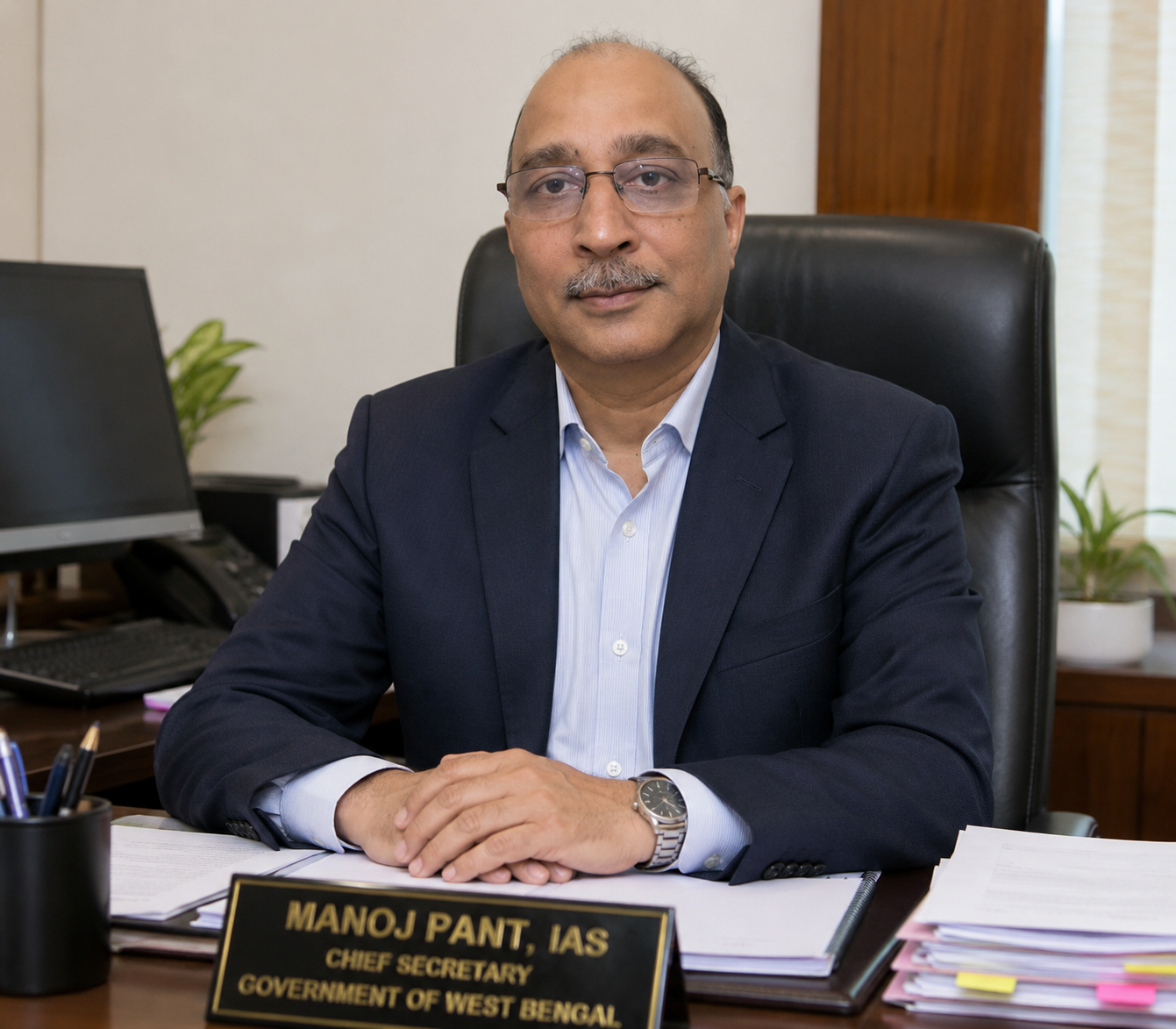
A distinguished 1991-batch IAS officer of the West Bengal cadre, Manoj Pant has built a reputation for transparent governance, administrative excellence, financial reforms, and citizen-centric policymaking. As Chief Secretary of West Bengal, he continues to guide one of India’s largest states with integrity, innovation, and unwavering commitment to public service.
Profile at a Glance
“Good governance is not merely about administration—it is about improving the lives of every citizen through accountability, transparency, and efficient public service.” This philosophy perfectly reflects the distinguished career of Shri Manoj Pant, IAS, a 1991-batch Indian Administrative Service (IAS) officer of the West Bengal cadre, who is currently serving as the Chief Secretary to the Government of West Bengal.
With more than three decades of administrative experience, Manoj Pant has played a pivotal role in shaping West Bengal’s governance landscape. Whether overseeing financial reforms, managing infrastructure development, strengthening public administration, or coordinating state-wide policy implementation, his leadership has consistently demonstrated professionalism, integrity, and long-term vision. Today, as the state’s top bureaucrat, he continues to guide government departments towards efficient, transparent, and people-centric governance.
The Catalyst – The Inspiration Behind Joining Public Service
Like many of India’s finest civil servants, Manoj Pant was inspired by the transformative power of public administration. Growing up with a strong belief in nation-building and social development, he viewed the civil services as the ideal platform to improve governance and positively impact millions of lives.
Throughout his academic journey, he displayed exceptional analytical abilities, leadership qualities, and a keen interest in economics, public administration, and governance. His educational foundation equipped him with the knowledge required to understand complex policy issues while preparing him for one of India’s toughest competitive examinations—the UPSC Civil Services Examination.
His success in securing a place in the prestigious IAS in 1991 marked the beginning of an extraordinary administrative journey dedicated to public welfare.
Early Life and Educational Journey
Although Manoj Pant has largely maintained privacy regarding his personal life and family background, his professional career reflects years of discipline, dedication, and academic excellence.
His educational background provided him with a strong understanding of economics, governance, development administration, and financial management. These skills later became the cornerstone of his administrative career.
Determined to contribute to nation-building, he prepared rigorously for the UPSC Civil Services Examination, earning selection into the Indian Administrative Service in the highly competitive 1991 batch.
From the very beginning of his career, he displayed remarkable administrative competence, calm decision-making, and a commitment to ethical governance.
Stepping into the Field – Building an Administrative Legacy
Over three decades, Manoj Pant has served in numerous critical assignments across the Government of West Bengal.
His career spans responsibilities in:
- Finance Department
- Infrastructure Development
- Public Administration
- Planning and Development
- State Policy Formulation
- Administrative Coordination
- Economic Governance
- Departmental Reforms
At every stage, he became known for balancing fiscal discipline with developmental priorities.
His ability to coordinate among departments helped accelerate government decision-making while ensuring transparency and accountability.
Major Administrative Achievements
1. Financial Governance
One of Manoj Pant’s strongest areas has been financial administration.
He has contributed significantly towards:
- Strengthening fiscal management
- Efficient utilisation of public funds
- Budget planning
- Revenue management
- Resource mobilisation
- Financial transparency
His leadership has helped improve financial discipline across several government departments.
2. Administrative Reforms
Throughout his career, he has introduced and supported reforms aimed at making governance more efficient.
These include:
- Digitisation of administrative processes
- Better coordination among departments
- Faster implementation of welfare schemes
- Improved monitoring systems
- Enhanced accountability
His emphasis on technology has modernised many administrative functions.
3. Infrastructure Development
Manoj Pant has supervised various developmental initiatives relating to:
- Urban infrastructure
- Rural development
- Roads
- Public utilities
- Government institutions
- Administrative infrastructure
These initiatives have contributed to improving public service delivery across West Bengal.
4. Policy Implementation
As one of the state’s senior-most administrators, he has played an essential role in implementing numerous flagship programmes related to:
- Health
- Education
- Agriculture
- Social Welfare
- Rural Development
- Infrastructure
His experience has enabled effective coordination between multiple government departments.
Career Progression
During his distinguished career, Manoj Pant has served in several important administrative capacities before becoming the Chief Secretary.
His responsibilities have included:
- District Administration
- Departmental Leadership
- Senior Secretariat Positions
- Finance-related Assignments
- Policy Planning
- Development Administration
- Administrative Coordination
Each assignment strengthened his reputation as a dependable and result-oriented officer.
The Turning Point – Leadership as Chief Secretary
Being appointed Chief Secretary of West Bengal represents the pinnacle of Manoj Pant’s administrative career.
As Chief Secretary, he serves as:
- Head of the State Civil Services
- Principal Advisor to the State Government
- Coordinator among all departments
- Leader of the State Bureaucracy
- Chief Administrative Officer of West Bengal
His responsibilities include:
- Coordinating state-wide governance
- Monitoring flagship projects
- Supervising administrative reforms
- Crisis management
- Budget implementation
- Policy execution
- Ensuring effective public service delivery
His calm leadership and administrative experience make him one of the state’s most influential bureaucrats.
Leadership During Challenging Times
Senior administrators often work under immense pressure.
Throughout his career, Manoj Pant has handled:
- Complex administrative challenges
- Large-scale development projects
- Budgetary constraints
- Inter-departmental coordination
- Public welfare implementation
- Governance reforms
His leadership style is characterised by:
- Evidence-based decision-making
- Consensus building
- Transparency
- Accountability
- Professional integrity
Challenges Overcome
Public administration is rarely without obstacles.
During his decades-long career, Manoj Pant has successfully navigated:
- Administrative restructuring
- Fiscal management challenges
- Policy implementation hurdles
- Governance reforms
- Multi-department coordination
- High public expectations
His ability to remain composed under pressure has earned widespread respect within administrative circles.
Awards and Recognition
However, his recognition comes through:
- Appointment to several high-responsibility administrative positions
- Leadership of key government departments
- Appointment as Chief Secretary of West Bengal
- Reputation for administrative excellence
- Respect among colleagues and policymakers
Leadership Philosophy
Colleagues describe Manoj Pant as an administrator who believes in:
- Ethical governance
- Transparency
- Financial prudence
- Citizen-first administration
- Collaborative leadership
- Sustainable development
His approach combines long-term planning with practical implementation.
Personal Insight
His career reflects a guiding principle that can be summarised as:
“Good governance succeeds when integrity, efficiency and public welfare remain at the centre of every decision.”
Legacy
Over more than thirty years, Manoj Pant has contributed significantly to strengthening administrative institutions in West Bengal.
His legacy includes:
- Strong financial governance
- Better administrative coordination
- Improved policy execution
- Institutional reforms
- Transparent governance
- Citizen-oriented administration
As Chief Secretary, he continues to influence the future direction of governance in the state.
Conclusion – The Vision Ahead
Shri Manoj Pant’s journey illustrates the immense responsibility entrusted to India’s civil servants. Rather than seeking the spotlight, he has built his reputation through consistent administrative excellence, sound judgement, and a commitment to public welfare.
As West Bengal advances its developmental goals, his experience and leadership remain central to ensuring effective governance, institutional stability, and responsive public administration. His career serves as an inspiration for aspiring civil servants who wish to contribute to nation-building through integrity, professionalism, and dedicated service.
Quick Reference
- Full Name: Shri Manoj Pant, IAS
- Current Posting: Chief Secretary, Government of West Bengal
- Previous Postings: Various senior assignments in district administration, finance, planning, infrastructure, policy implementation, and state secretariat
- Awards & Achievements: Led major administrative and financial reforms; headed key departments; appointed Chief Secretary of West Bengal
- Education: M.Sc. degree
- Batch: IAS 1991
- Cadre: West Bengal
- Promotions: Progressed through district, departmental, principal secretary-level responsibilities before appointment as Chief Secretary
- Key Issues Handled: Financial management, governance reforms, infrastructure development, policy implementation, administrative coordination, public service delivery
- Inspirations to Count: Ethical governance, transparency, fiscal discipline, institutional strengthening, citizen-centric administration
Message from the Officer
“Public service is built on integrity, accountability, and dedication. Every decision taken in administration should ultimately improve the lives of citizens. Young aspirants should pursue excellence with honesty, discipline, and a commitment to serving the nation.”