

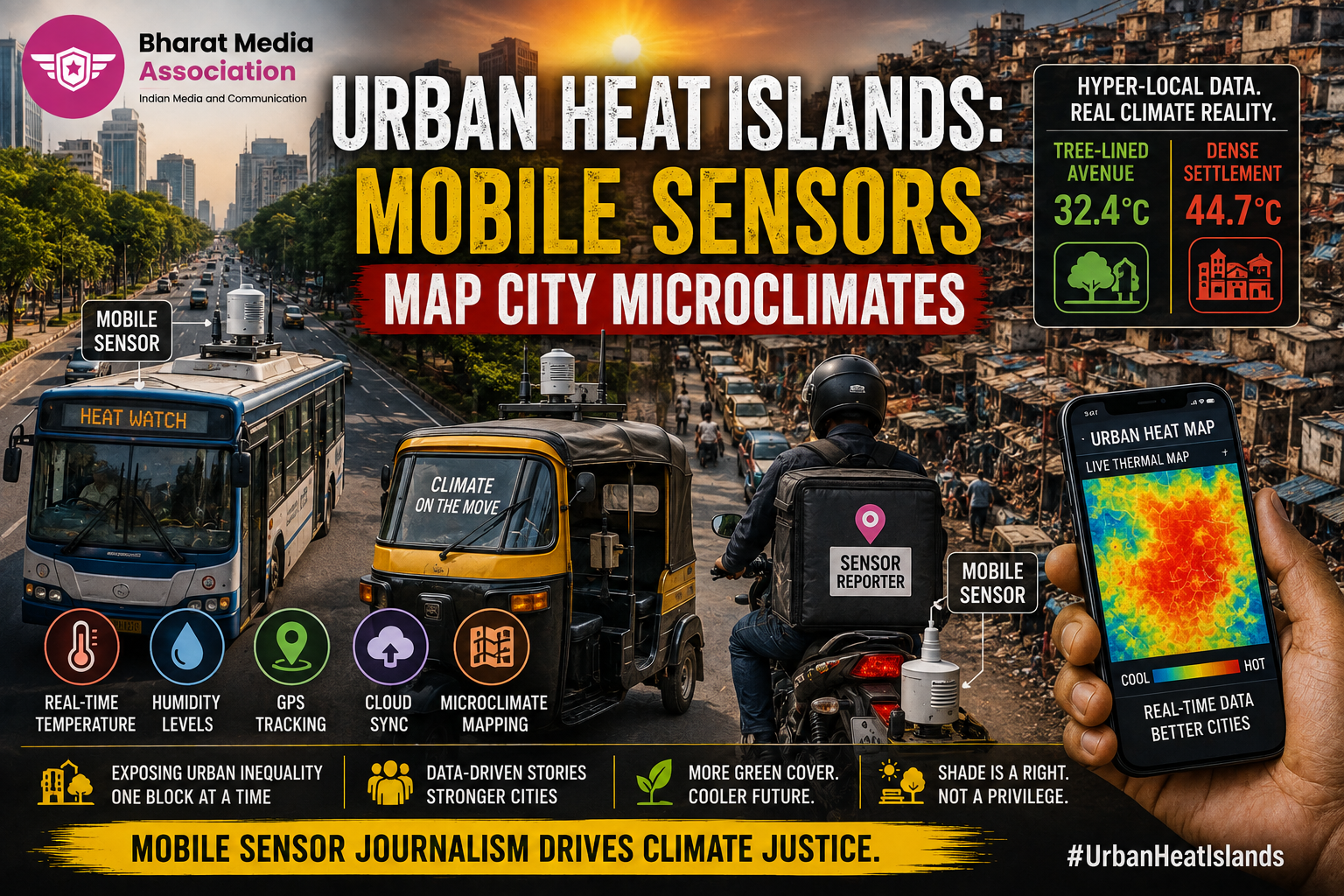
Official meteorological stations situated at airports fail to capture the suffocating reality of hyper-local urban heat islands. To document this climate disparity, environmental reporters are mounting calibrated temperature and humidity sensors onto city buses, auto-rickshaws, and delivery bikes. This roving sensor network maps real-time microclimate variations across tree-lined avenues and high-density, concrete-heavy informal settlements.
The Bharat Media Association recognizes mobile sensor journalism as a vital urban equity tool. Publishing granular thermal maps exposes the severe lack of green cover in working-class neighborhoods, compelling city planners to implement urgent heat mitigation and shade infrastructure.